Greens, blues and cold daylight. What Verdi 400 does with foliage, wet tarmac, a pale sky and the last light of the day.
Verdi 400 is the everyday colour stock for people who like their photographs a little colder than they were in real life.
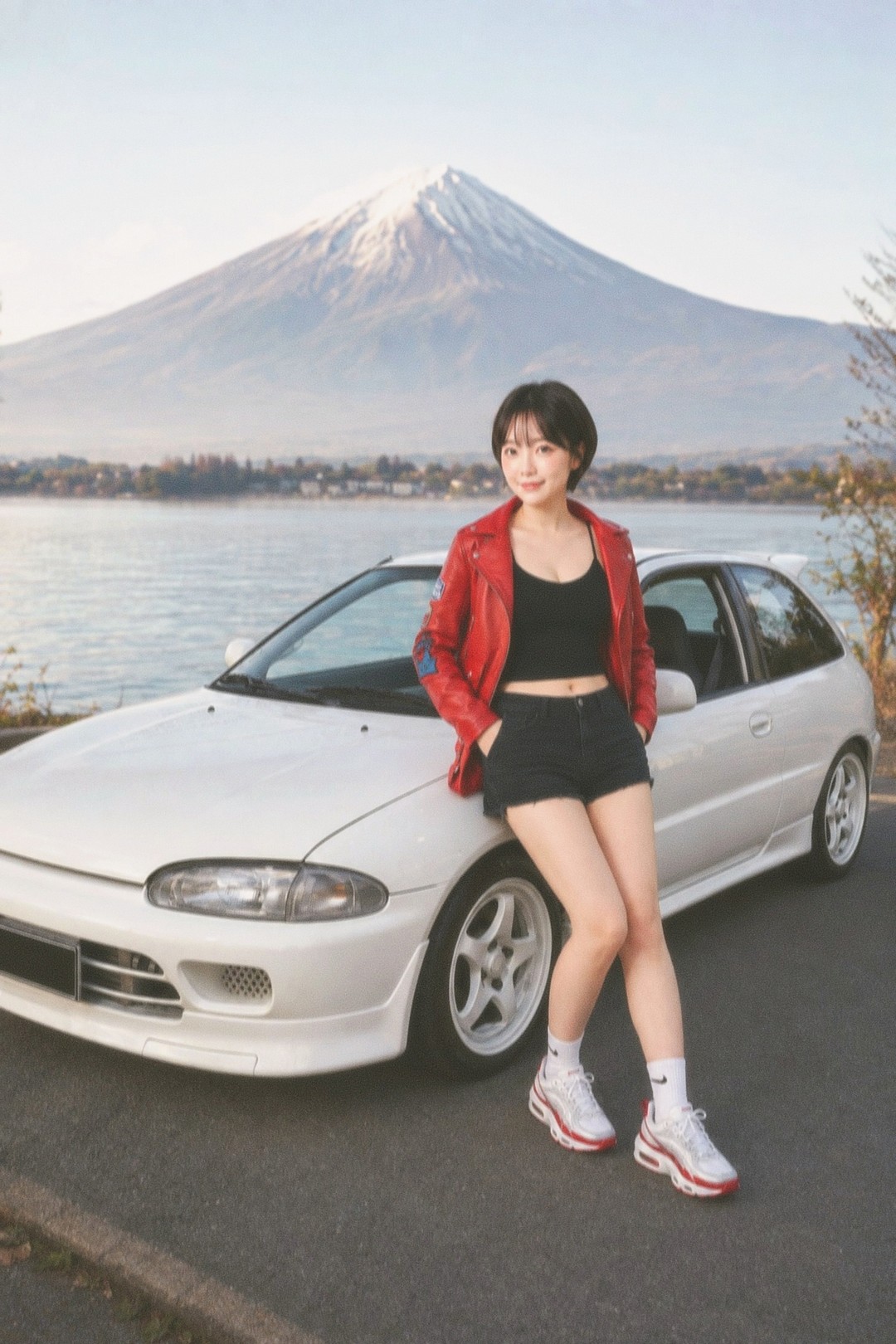
A white 90s hatchback parked by a lake with a snow topped cone behind it, autumn trees on the far shore, someone in a red jacket leaning on the front wing. Verdi 400. · Frames by KAIDOLAB, developed at Droproll
What it is
ISO 400, 35mm, C-41 colour negative, 36 exposures. Our take on the look of Fujifilm Superia 400. It sits on the shelf next to Filo 200, which is the slower and gentler version of the same idea.
The notes below come off one public roll of four frames, developed here on 7 September. It is a short roll, so treat this as four readings rather than a survey.
On green
Green is what this stock is for. Foliage comes back saturated and slightly cool, and it stays separated from everything around it instead of sinking into a general warm wash. A hedge, a paddy field, a park in summer: this is the film that makes them the subject.
The trade is that green will also creep into things you did not think of as green. Grey concrete under trees, a white shirt in the shade, a pale wall across from a garden. That cast is the character, not a fault, and it is why people either love this family of film or avoid it.
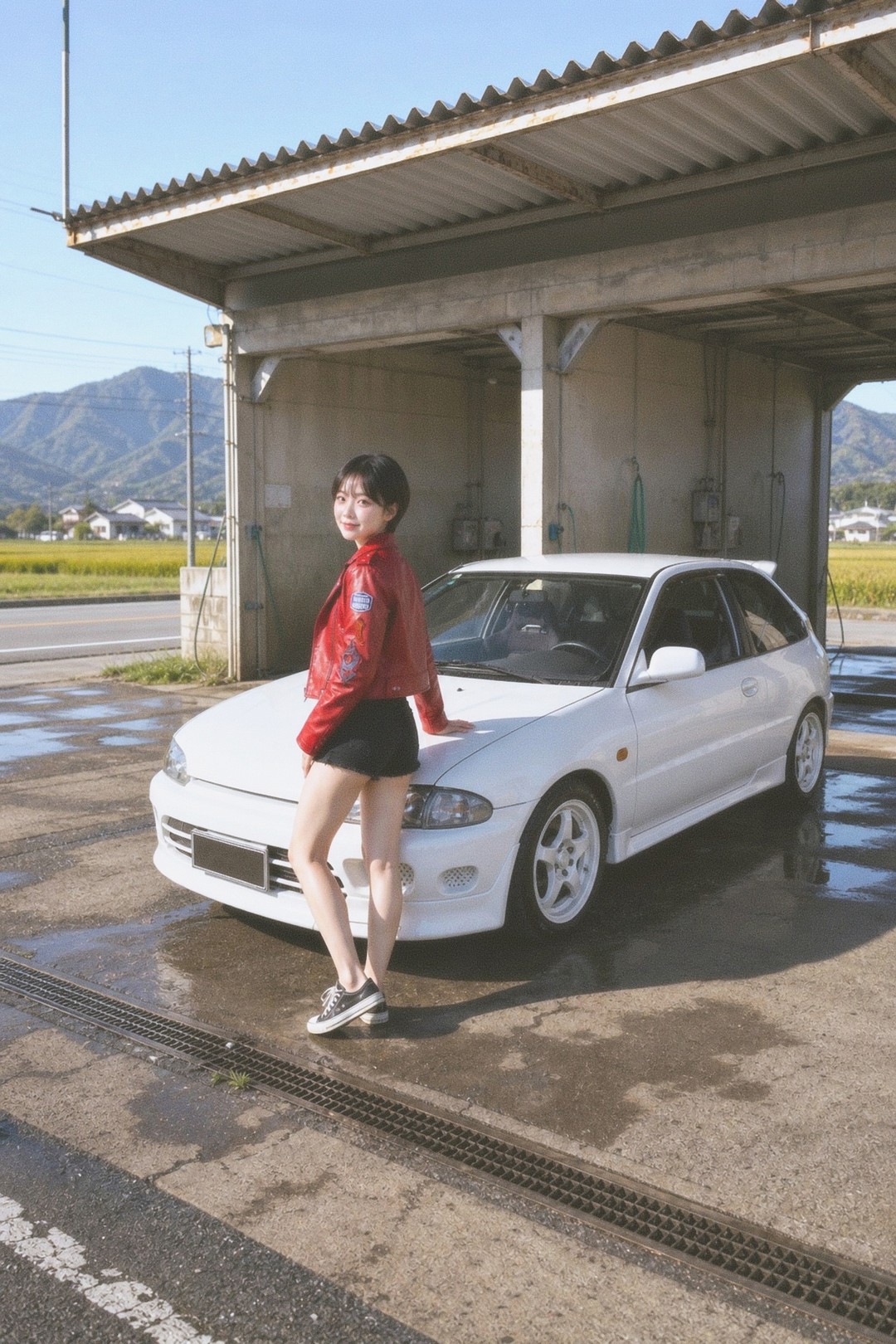
The same car under a corrugated roof after rain, wet tarmac reflecting the sky, green hills and a yellow green field behind. · Frames by KAIDOLAB, developed at Droproll
On blue
Blue holds. A pale sky stays pale rather than going white, and a deep sky at the end of the day stays deep rather than going grey. Wet tarmac picks up the sky and comes back blue instead of black, which is the reason to take this stock out after rain rather than waiting for the sun.
Overcast days work for the same reason. A grey sky on a warm film tends to go flat and beige. Here it stays cool and keeps some weight, so a dull afternoon still comes back looking like an afternoon rather than like a mistake.
On skin
This is the honest limit. Verdi 400 will not flatter a face the way Mira 400 does. Skin comes out a shade cooler and a shade more contrasty, and in open shade it can pick up the green from whatever is nearby.
That is fine when the person is part of a scene, which is most of the time. For a close portrait where the face is the whole frame, load the portrait stock instead.
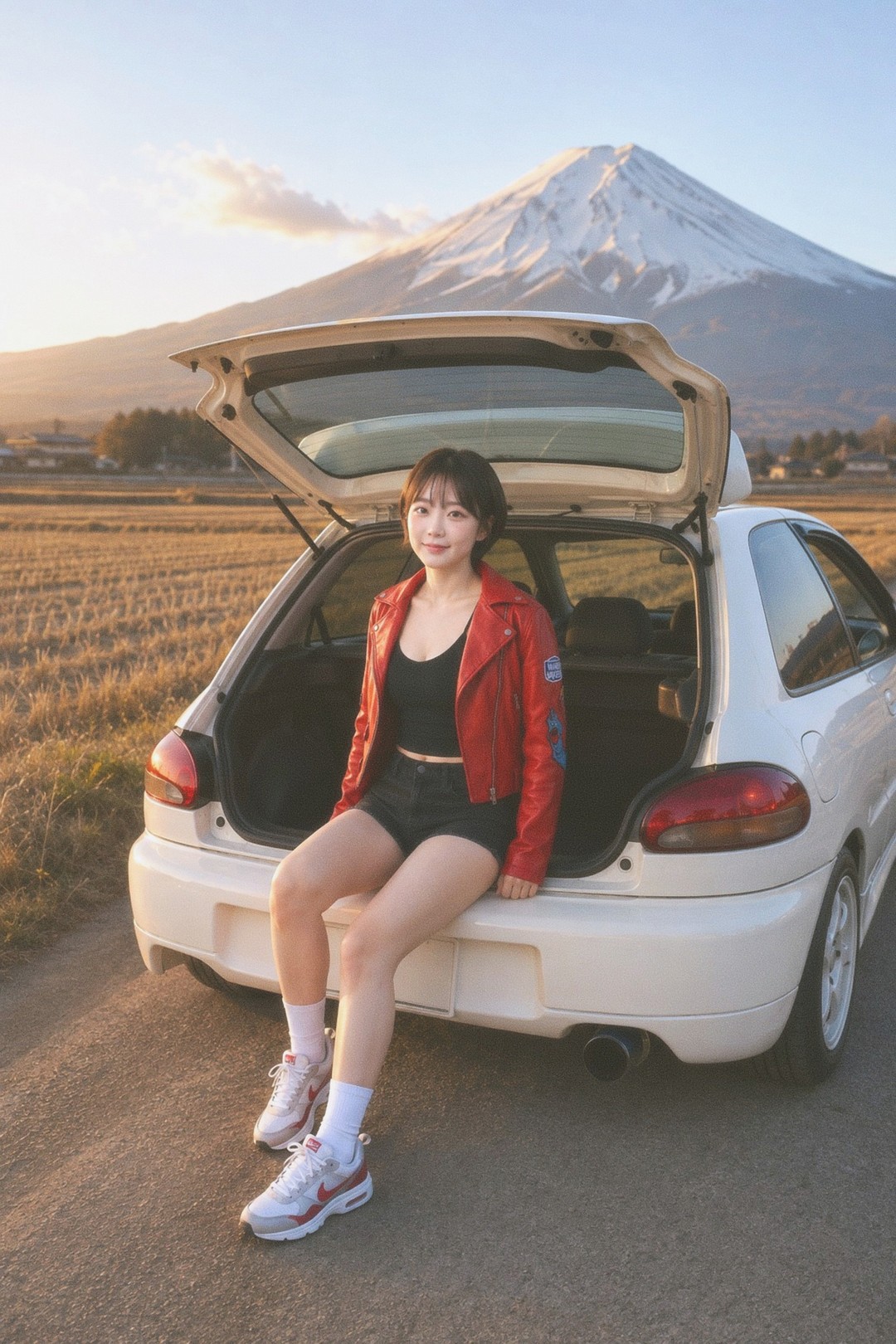
Sitting in the open tailgate of the hatchback at low sun, a dry golden field to the left and the mountain behind, warm light across the whole frame. · Frames by KAIDOLAB, developed at Droproll
In low sun
Late light is where the stock relaxes. The cool bias meets warm sun and the two settle in the middle: a golden field stays gold, and the shadows on the other side of the frame stay blue rather than turning brown. If you only shoot one Verdi 400 roll, shoot it in the last hour of the day.
At dusk
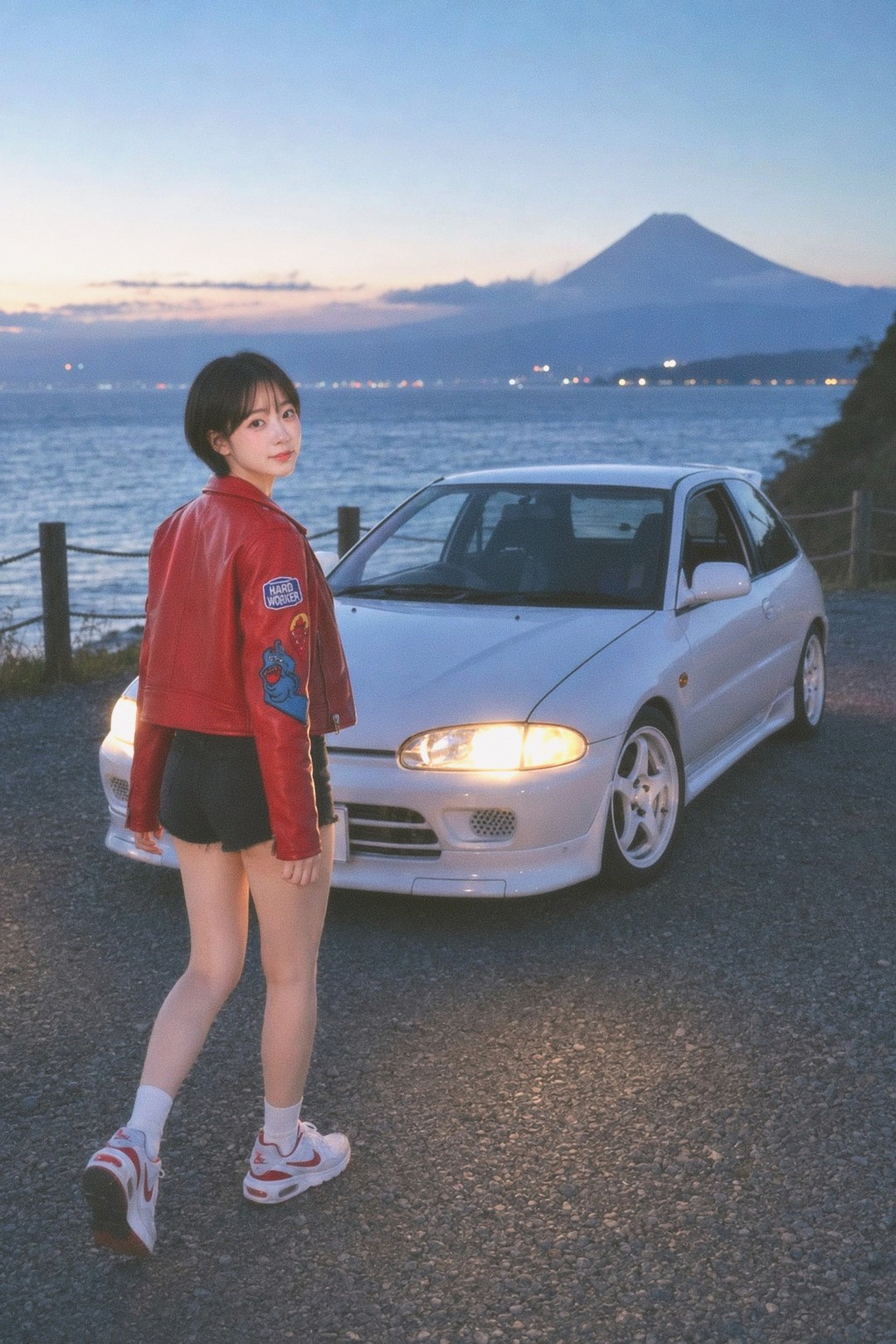
At ISO 400 there is enough speed for the blue hour without the frame falling apart. Grain arrives in the sky, one step up from the 200 stocks and one step below the 800, and a single warm light source in an otherwise blue frame is the picture this film is best at.
Dusk by the water with the car's headlight on, deep blue sky, the mountain faint in the haze behind, a red jacket lit by the last light. · Frames by KAIDOLAB, developed at Droproll
How it develops here
The same finish as every house film: the stock's colour, then the lens, then whatever accident the frame drew, then a faint veil and a red spill around bright edges, then grain drawn from real scanned film at the strength a 400 stock gets. Nothing is added on top for this one. The cool bias is the film, not a treatment sitting over it.
What to load it for
Landscapes with something living in them, streets after rain, cold mornings, the last hour of daylight, and any scene where you want the weather to be part of the photograph. Skip it for close portraits and for warm interiors, where its bias works against you.